
Yes, you can eat artichokes at night: they are low in calories and almost fat-free. They may disagree with you if you eat a lot, if your gut is sensitive to fructans (for example, with IBS) or if they are fried or served with heavy sauces. Steam, grill or roast them and leave 2 to 3 hours between dinner and bedtime.
Updated November 2, 2026
Updated: November 2026
Many things affect how well we sleep: exercise, stress, a good mattress… and, of course, what we eat for dinner. A light, balanced evening meal may help you rest better. But when it comes to artichokes, a question often pops up: can you eat them at night, or is it better to keep them for lunch?
In this article we explain what happens when you eat artichokes in the evening, when they might not agree with you, and how to cook them so they become part of your ideal dinner. Keep reading!
Can you eat artichokes at night?
Yes. Artichokes can be eaten at any time of day and they work well at dinner. They are high in water, virtually fat-free and provide around 47 kcal per 100 g. Their fibre also helps you feel full, as long as you cook them simply.
Want to know everything they offer? Take a look at our ultimate guide to artichokes.
Why artichokes are a good choice for dinner
- They are light: few calories and almost no fat.
- They are filling: their fibre helps you feel full on few calories.
- They provide magnesium: between 12 and 60 mg per 100 g, depending on the food table. Magnesium contributes to normal muscle function and to the normal functioning of the nervous system.
What are the effects of eating artichokes at night?
In general, a normal serving of well-cooked artichoke should not cause problems. Discomfort appears in specific cases.
What if I eat a lot of artichokes at night?
As with any food, too much can be a problem, especially if you go to bed shortly afterwards:
- Gas and bloating: artichokes are rich in fructans, a type of fibre that ferments in the gut. If you are prone to gas or have IBS, a large serving at night may be uncomfortable.
It usually takes a lot of artichoke at once or a sensitive gut.
How many artichokes are recommended to eat in one day?
There is no official amount for artichokes. As a reference, the Spanish Agency for Food Safety and Nutrition (AESAN) recommends at least 3 servings of vegetables a day, 150 to 200 g each. Variety is key.
Do artichokes make you gain weight at dinner?
What matters most is your total calorie intake and what you eat across the day. Artichokes are a light vegetable, although some research suggests that eating very late increases hunger and lowers energy expenditure, so it is better not to leave dinner too late. What can add calories is how you prepare them: battered, fried or with creamy sauces, the dish changes completely.
How should you eat artichokes at night?
In the evening, choose simple, low-fat preparations. This table will help you decide:
| Preparation | For dinner? | Why |
|---|---|---|
| Steamed | Highly recommended | No added fat |
| Grilled or pan-seared with a drizzle of EVOO | Highly recommended | Light and ready in minutes |
| Oven-roasted | Recommended | Toasty texture with very little oil |
| In an omelette or scrambled eggs | Recommended | A complete dinner with protein |
| In a warm salad | Recommended | Fresh and filling |
| Battered or deep-fried | Better at lunchtime | More fat and slower digestion |
One extra tip: leave 2 to 3 hours between dinner and bedtime, especially if you get heartburn.
Two light dinner ideas with artichokes
Here are two quick, light dishes to make artichokes the star of your dinners.
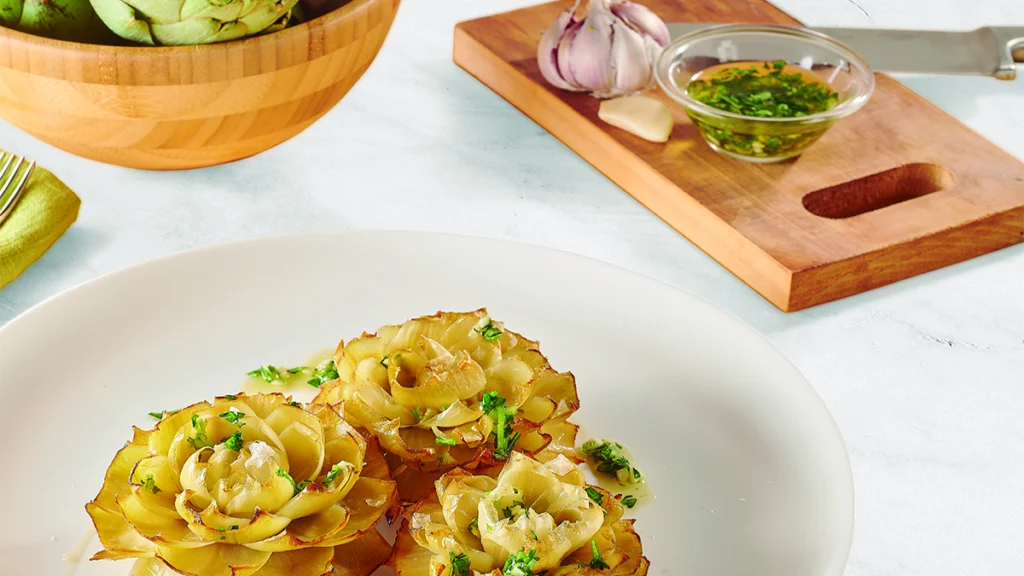
Confit artichoke flowers, ready in minutes
Sear the flowers in a pan with a drizzle of olive oil, serve them over a romesco or tomato base and sprinkle with ground almonds. A light dinner with a gourmet touch in under ten minutes.
For this dish we recommend our Confit artichoke flowers in extra virgin olive oil.
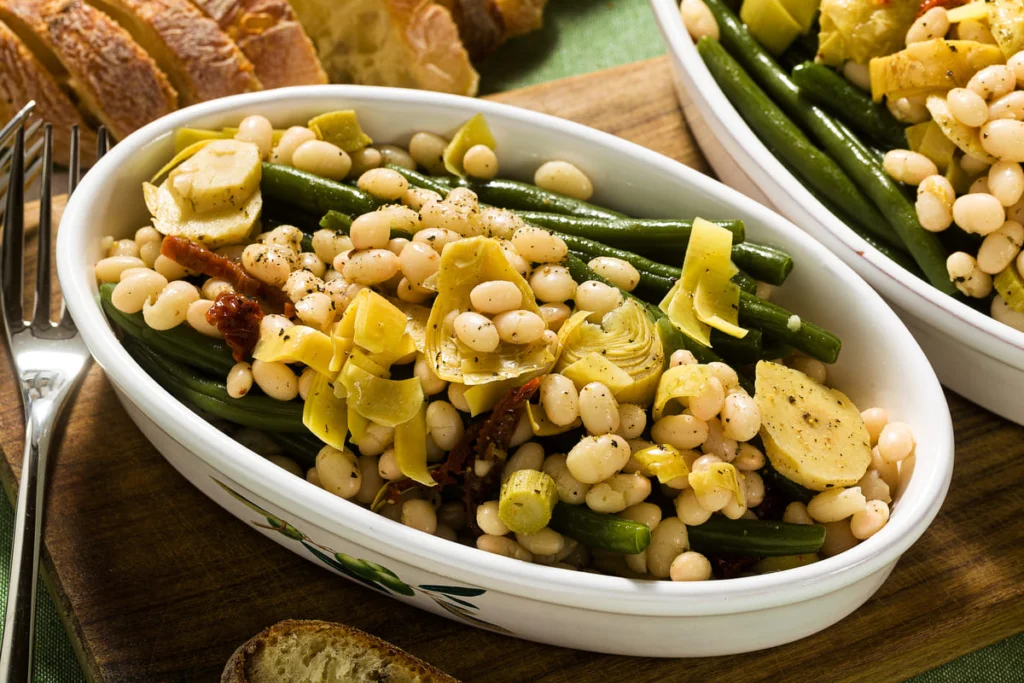
Warm salad with steamed artichokes
White beans, artichokes, green beans and sun-dried tomatoes, quickly sautéed and dressed with a vinaigrette. Balanced, filling and perfect for a light dinner.
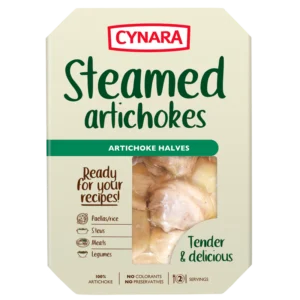
For this recipe we recommend our steamed artichokes, ready to sauté. You will find more ideas in 6 easy recipes with steamed artichokes.
What side effects do artichokes have?
With artichokes as a food, digestive discomfort is the most common complaint:
- Gas and bloating in people with a fibre-sensitive gut.
- Discomfort in people with gallstones or bile duct obstruction.
- Allergic reactions in people sensitive to plants of the Asteraceae family.
If you take artichoke extracts together with blood-pressure medication or diuretics, check with your doctor first.
The takeaway: yes to artichokes at dinner
Now you know that artichokes can be part of a light dinner. Just choose a simple preparation and don’t overdo the amount if your gut is sensitive.
At Cynara we want eating well at night to be as easy as opening a jar. Discover our recipes and our full range of products.
Frequently asked questions
Are artichokes good for dinner if I want to lose weight?
They can be: they are low in calories and provide fibre, which helps you have a light dinner. No food makes you lose weight on its own, so avoid frying them or adding heavy sauces.
Do artichokes help you sleep?
No studies show that. A light dinner may help you feel comfortable at bedtime, but artichokes are not a sleep remedy.
Why do artichokes disagree with me at night?
Usually because of the gas produced by their fructans, especially with large servings or IBS. Try smaller portions and, if the discomfort continues, talk to your doctor.
How many hours before bed should I have dinner?
The usual advice is to wait 2 to 3 hours before lying down, especially if you get heartburn or reflux.
Can I eat canned artichokes for dinner?
Yes. Canned or steamed artichokes let you prepare dinner in minutes. Check the nutrition table and the salt of each product. Read more about canned artichoke properties.
With Cynara products

Sources
- USDA FoodData Central: Artichokes, (globe or french), raw (fdcId 169205, SR Legacy; consultado por la API de FDC) (2026-11-02)
- FEN, Mercado de alimentos: Alcachofa (ficha) (2026-11-02)
- Reglamento (UE) 432/2012, anexo de declaraciones autorizadas (copia en legislation.gov.uk) (2026-11-02)
- Monash University: High and low FODMAP foods (2026-11-02)
- Consumer: nuevas recomendaciones dietéticas de la AESAN (2026-11-02)
- Vujović N et al. Late isocaloric eating increases hunger, decreases energy expenditure. Cell Metab 2022 (2026-11-02)
- HealthLink BC: GERD, controlling heartburn by changing your habits (2026-11-02)
- EMA/HMPC: European Union herbal monograph on Cynara cardunculus L., folium (2018) (2026-11-02)