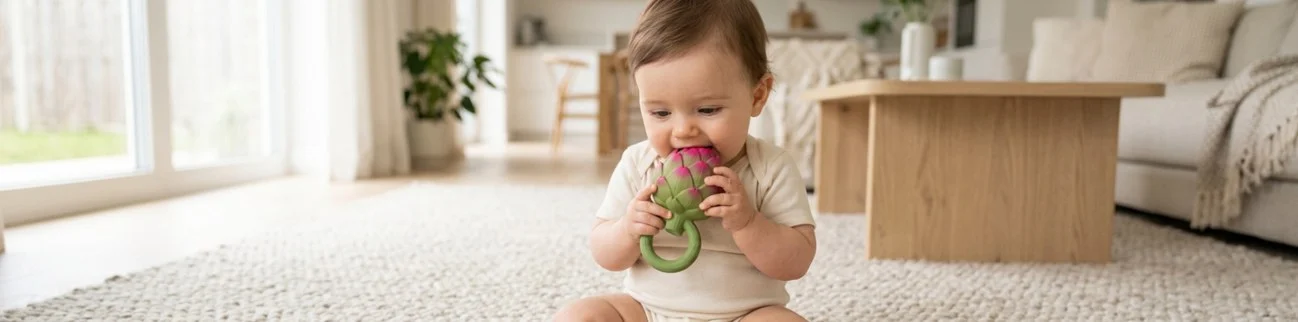
If you are wondering at what age babies can eat artichoke, the short answer is: from 6 months. At Cynara, our aim is to encourage healthy habits from an early age. We know that introducing new foods raises questions for mothers, fathers and carers, so we want to support you through this stage with practical information and by promoting healthy foods as part of a balanced diet.
How should we introduce artichoke into our babies’ diet?
We often forget that artichoke can be one of the first foods in complementary feeding, served as a purée, instead of courgette or pumpkin, the vegetables most commonly used at this stage. Artichoke hearts in brine offer plenty of benefits for babies: they are rich in fibre and provide a wide range of vitamins and minerals.
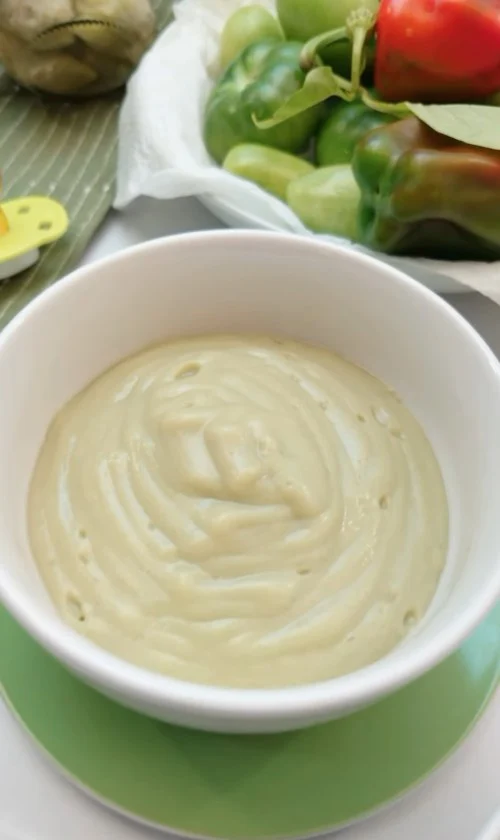
Recipe: artichoke and pea purée
A simple recipe with a smooth texture and green as the star. Healthy eating made easy: Cynara artichokes, peas and a good drizzle of olive oil. Perfect for little ones discovering artichoke in their first meals.
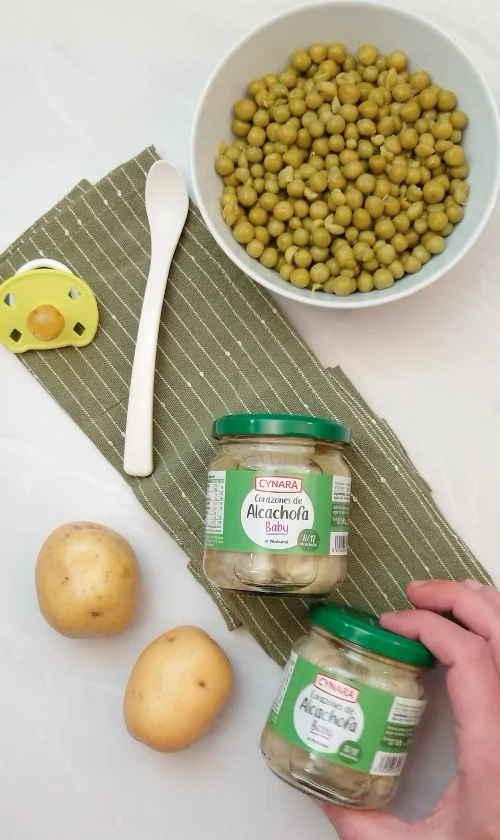
Ingredients:
- Cynara baby artichoke hearts in brine
- Peas
- Potato
- A drizzle of olive oil
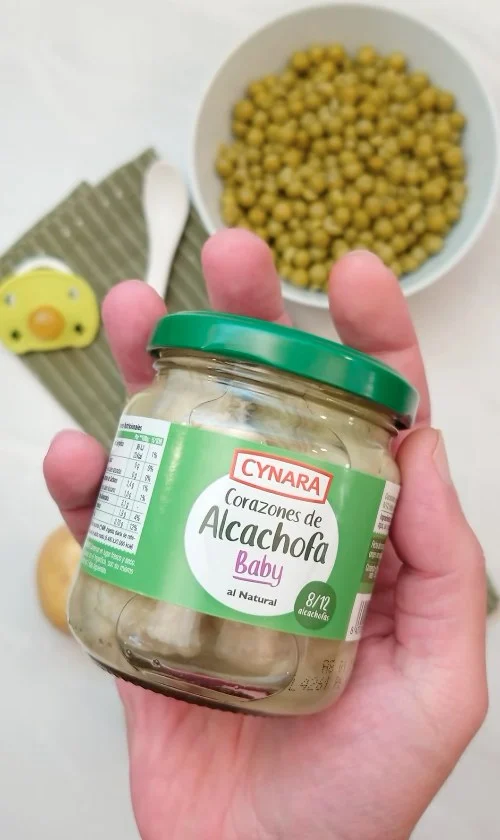
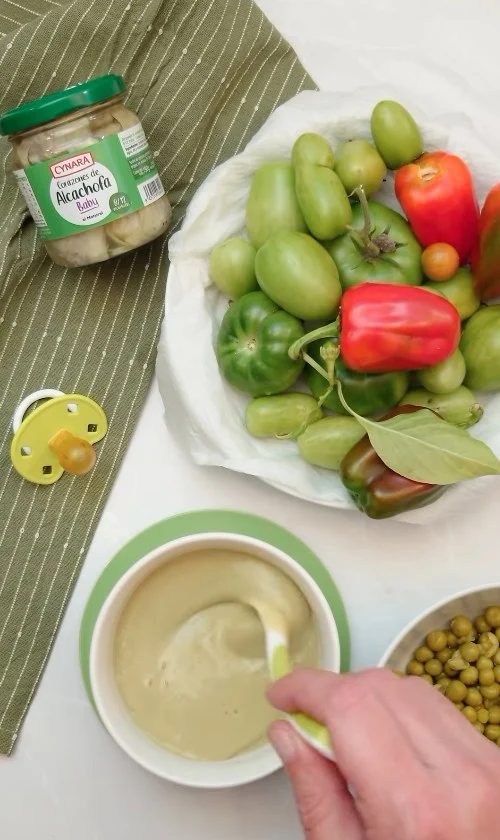
Once your baby reaches six months and shows all the signs of being ready for complementary feeding, you can offer artichoke in solid form. The aim is not only for your child to eat it, but to discover new textures, flavours and colours, building a positive and lasting relationship with this vegetable.
Benefits of artichoke in children’s diets
Artichoke is an excellent food, rich in fibre, vitamins and minerals.
- High in fibre: ideal for easing the constipation that sometimes appears when complementary feeding begins.
- Rich in iron and vitamins: it contains B vitamins, vitamin C and minerals such as potassium, calcium and iron, all essential for a baby’s development.
- Protects the liver: it contains cynarin, a substance that supports healthy liver and bile function.
The “My First Artichoke” campaign
To respond to what families need, Cynara has launched the “My First Artichoke” (Mi primera alcachofa) campaign.
What is it about? The initiative has a very clear goal: to give families useful, practical and reliable information on introducing artichoke into children’s diets. We want to dispel the idea that artichoke is a “difficult” food for little ones (more info).
Through this campaign we share resources, recipes and tips backed by paediatric nutrition professionals, so that introducing this superfood is safe, fun and nutritious.
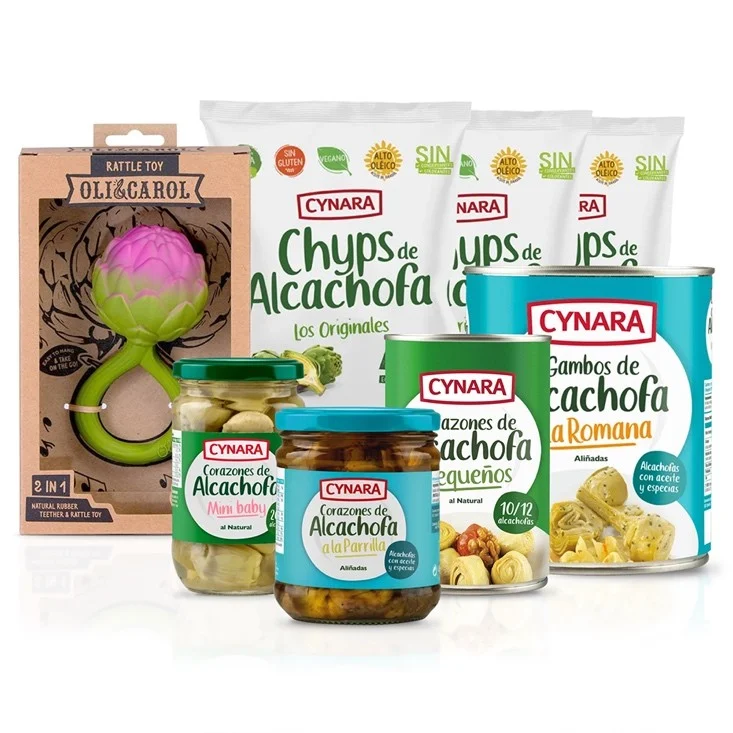
The “My First Artichoke” giveaway has ended
On 9 November we launched the “My First Artichoke” giveaway on Instagram, together with María Lazo and her paediatric nutrition team (@marialazonutricion). There were 3 winners, and each one receives a bundle of Cynara products with an eco-friendly, biodegradable teether rattle by Oli&Carol, made from 100% natural rubber, with recycled cherry seeds inside and hand-painted with natural inks.
The giveaway is now closed. Thank you to every family who took part and told us which vegetable is the hardest to introduce at home.
If you don’t want to miss our next giveaways, follow us on Instagram, Facebook, TikTok, YouTube and LinkedIn.
At Cynara we know it is completely normal to have concerns when introducing new foods. Below we answer the most common questions about introducing artichoke into our children’s diets.
Frequently asked questions (FAQ)
1. At what age can I give my baby artichoke?
You can introduce artichoke from 6 months of age, when complementary feeding begins, as long as your baby has reached the necessary developmental milestones (sitting up unaided, loss of the tongue-thrust reflex, etc.).
2. What are the benefits of artichoke for children?
Artichoke is an exceptional food for children’s development:
- High in fibre: helps prevent constipation, which is very common when starting solid foods.
- Rich in vitamins and minerals: provides calcium, phosphorus, potassium and B vitamins.
- Aids digestion: its natural properties look after the liver and support digestive function.
More on the benefits and properties of artichoke
3. How should I prepare it to avoid choking risks (BLW)?
Texture is the biggest challenge with artichoke. To offer it safely:
- Use only the hearts: they are the most tender part. Discard all the tough, fibrous outer leaves.
- Cook thoroughly: steam or boil them until they are very soft. You should be able to squash them easily between your fingers or with a fork.
- Safe cuts: offer it in lengthwise quarters so your baby can grip it in their fist, or mashed as a purée if you prefer spoon-feeding.
4. Does artichoke give babies wind?
Because it contains inulin (a type of prebiotic fibre that is excellent for gut flora), it may cause some wind. To minimise this, introduce it in small amounts and gradually, so your baby’s digestive system can adapt.
5. Is artichoke an allergenic food?
Artichoke allergy is very rare. However, as with any new food, follow the 3-day rule: offer it on its own for three consecutive days (without introducing other new foods at the same time) so you can watch for any adverse reactions.
At Cynara, we care about what your family eats. We invite you to join the #MiPrimeraAlcachofa campaign by sharing your recipes and your little ones’ reactions when they try it for the first time. Let’s make eating vegetables a delicious adventure!